What Is Bacteriostatic Water? A Plain-Language Explainer
What is bacteriostatic water and how does it differ from sterile water? A plain-language look at composition, labeling, and reconstitution math.
Anthony Russo, DO, MS is a Doctor of Osteopathic Medicine with a Master of Science in clinical research whose background spans regenerative medicine and peptide therapeutics.
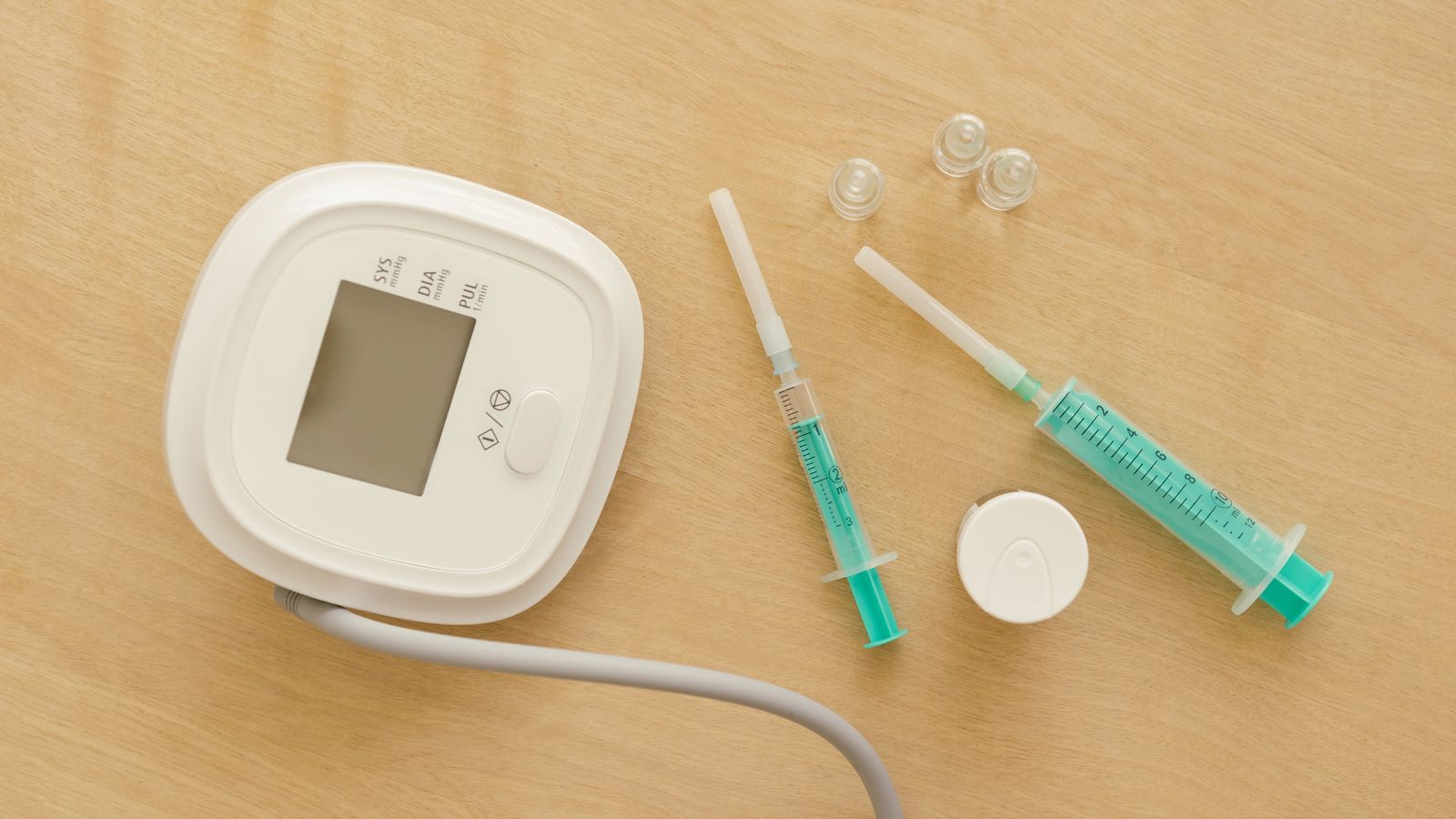
Bacteriostatic water is sterile water for injection that has had a small amount of benzyl alcohol added, typically around 0.9%, so that it resists bacterial growth once a vial has been punctured more than once. That distinguishes it from plain sterile water, which is meant for a single draw and is usually discarded after the seal is broken. In peptide reference listings, bacteriostatic water shows up constantly because it is the diluent most often paired with lyophilized (freeze-dried) peptide vials before any concentration or volume figures can be calculated.
Why the Word “Bacteriostatic” Matters
The prefix “bacterio-” refers to bacteria, and “-static” means holding something steady rather than eliminating it outright. A bacteriostatic solution does not sterilize a vial or kill existing contamination; it slows the reproduction of bacteria that might enter through repeated needle punctures. That is a meaningfully different claim than “sterile,” and listings that use the two terms interchangeably are being imprecise. Sterile water for injection is bacteria-free at the moment the vial is opened but offers no ongoing protection after that. Bacteriostatic water starts sterile and then relies on the benzyl alcohol to limit growth across multiple draws over the vial’s labeled shelf life once opened.
Composition and Labeling
A standard bacteriostatic water vial lists two ingredients: water for injection and benzyl alcohol, usually expressed as a percentage (commonly 0.9% w/v). Reputable listings state that percentage explicitly rather than just printing “bacteriostatic” on the label, because the benzyl alcohol concentration is the detail that defines the product’s shelf behavior after first use. Vial sizes in the research supply space commonly run from small single-use-adjacent volumes up to 30 mL multi-draw vials, and listings should specify both the total volume and the benzyl alcohol percentage clearly.
How It Relates to Reconstitution
Reconstitution is the process of adding a liquid diluent to a lyophilized powder so that it becomes a liquid solution again. Bacteriostatic water is the most commonly referenced diluent for this step in peptide listings because its multi-draw properties suit vials that are accessed more than once. The core relationship is simple:
Concentration = vial mass (mg) ÷ volume of diluent added (mL)
For example, a listing describing a 5 mg vial reconstituted with 2 mL of bacteriostatic water is describing a resulting concentration of 5 mg ÷ 2 mL = 2.5 mg/mL. Converting that to micrograms, since 1 mg equals 1000 mcg, 2.5 mg/mL is the same as 2500 mcg/mL. If a different listing instead reconstitutes the same 5 mg vial with 5 mL of bacteriostatic water, the concentration becomes 5 mg ÷ 5 mL = 1 mg/mL, or 1000 mcg/mL. The volume of diluent chosen directly sets the resulting concentration; more diluent produces a more dilute solution, and less diluent produces a more concentrated one. Neither figure is “correct” in isolation — it depends entirely on what concentration the listing or reference material is targeting.
The table below shows how the same 5 mg vial’s concentration changes depending on how much bacteriostatic water is added, holding the vial mass constant.
| Bacteriostatic water added | Resulting concentration | Concentration in mcg/mL |
|---|---|---|
| 1 mL | 5 mg/mL | 5000 mcg/mL |
| 2 mL | 2.5 mg/mL | 2500 mcg/mL |
| 3 mL | 1.67 mg/mL | 1670 mcg/mL |
| 5 mL | 1 mg/mL | 1000 mcg/mL |
| 10 mL | 0.5 mg/mL | 500 mcg/mL |
Some listings also reference a U-100 insulin syringe when describing draw volumes, since that syringe type marks 1 mL as 100 units. That scale is a syringe convention for reading a graduated barrel, not a property of bacteriostatic water itself, but it explains why some reconstitution references convert mL figures into “units” for readability.
Bacteriostatic Water vs. Sterile Water vs. Saline
Listings sometimes use these three terms loosely, but they are not interchangeable in a technical sense:
| Diluent | Contains preservative | Typical use context in listings |
|---|---|---|
| Bacteriostatic water | Yes (benzyl alcohol) | Multi-draw vials, repeated access over time |
| Sterile water for injection | No | Single-draw use, no preservative properties |
| Bacteriostatic saline | Yes (benzyl alcohol) | Multi-draw, with sodium chloride also present |
The presence or absence of a preservative is the defining distinction, not sterility, since all three start out sterile before the vial is opened. A listing that fails to specify which of the three it means is leaving out a detail that affects both shelf handling and any concentration math built on top of it.
Reading Vial Labels Correctly
When a peptide reference lists bacteriostatic water as the recommended diluent, the details worth checking on the label are the total volume of the vial, the benzyl alcohol percentage, and any storage temperature guidance printed by the manufacturer. Retailers and research suppliers that document their sourcing tend to list these figures plainly rather than folding them into vague marketing language. HEEZ Research’s bacteriostatic water product page is one example of a listing that states the volume and preservative content directly rather than leaving it implied.
For anyone cross-checking reconstitution math from a listing, an independent calculator such as peptcalc.com can be used to verify that a stated mg/mL or mcg/mL figure follows correctly from the vial mass and diluent volume described.
Summary
Bacteriostatic water is sterile water for injection with a small percentage of benzyl alcohol added, which lets it resist bacterial growth across multiple vial punctures rather than requiring single-use disposal. It is the diluent most frequently referenced alongside lyophilized peptide vials in research listings, and its volume is the direct input into any concentration calculation: vial mass divided by diluent volume gives concentration, and that figure can be converted between mg/mL and mcg/mL using the standard 1 mg equals 1000 mcg relationship. Reading a listing’s stated volume, benzyl alcohol percentage, and vial size carefully is the difference between a precise reference and a vague one.